Japan protests suspected Russian airspace intrusion near Okinoshima
Japan's Defense Ministry said two suspected Russian aircraft entered Japanese airspace over territorial waters northwest of Okinoshima in Fukuoka Prefecture on 17 November. Defense Minister Shinjiro Koizumi said Japan lodged an extremely stern diplomatic protest with Moscow and demanded measures to prevent further airspace violations.
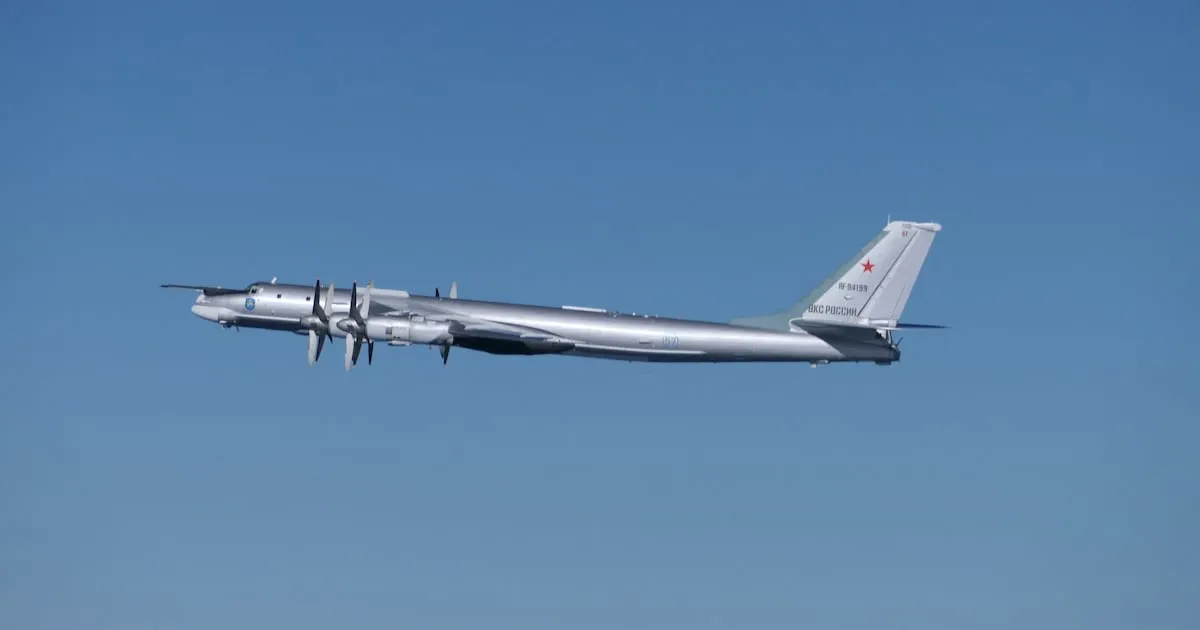
The incursions were recorded from 4:07 to 4:10 a.m. and from 4:09 to 4:12 a.m. local time, the ministry said. Japan's Air Self-Defense Force scrambled fighter jets and warned the aircraft. Koizumi said the alleged violation seriously infringed Japan's sovereignty and threatened its security. He said it was difficult to make a clear judgment about the aircraft's intentions and did not specify their types. Russia had not responded to the reported incident.A

Japan's Defense Ministry said the aircraft subsequently flew south through the Tsushima Strait, passed between Japan's Yonaguni Island and Taiwan, and entered the Pacific Ocean. Taiwan's Defense Ministry said it detected two Russian military aircraft sorties entering Taiwan's air defense identification zone from the northeast early in the morning, passing through eastern airspace and departing to the southeast. The ministry said its military monitored the flight with joint intelligence, surveillance and reconnaissance capabilities, but did not disclose the aircraft types, detailed flight paths or entry times. Taiwanese authorities said they deployed fighter aircraft. Flight paths released by Japan and Taiwan suggested the aircraft may have belonged to the same group, though Taiwan did not explicitly confirm a connection.

South Korea's military said several Russian military aircraft entered its air defense identification zone over the Sea of Japan, which South Korea calls the East Sea. The military detected the approaching aircraft in advance, scrambled fighter jets and took tactical response measures. South Korean authorities said the aircraft did not enter the country's territorial airspace and later left the zone. Air defense identification zones are monitoring areas outside sovereign airspace used to identify and track aircraft. Entering one does not by itself violate sovereign airspace.
Chieh Chung, an adjunct assistant professor at Tamkang University's Graduate Institute of International Affairs and Strategic Studies, said Russian and Soviet military aircraft had entered Taiwan's air defense identification zone during and around the end of the Cold War. He said Russian military flights through the zone east of Taiwan had become substantially less frequent since the Cold War ended and remained far from routine. Chung said Taiwanese military radar detected one Russian Tu-95 strategic bomber entering the zone from the northeast in January 2010. He said the military radioed the initially unidentified aircraft to ask its intentions and request its departure, after which it turned toward the Ryukyu Islands and was identified through intelligence exchanges several days after detection. He said Taiwan's air force scrambled 4 F-5E fighter jets to intercept a Tu-95 bomber that entered airspace around Taiwan in 1986.
An APEC meeting is scheduled to open in Shenzhen on 18 November. Russian President Vladimir Putin and US President Donald Trump are due to attend the summit in China. Putin, Chinese leader Xi Jinping and Trump are scheduled to hold trilateral talks during the forum on 18–19 November.
Sources
Radio Free Asia (Mandarin) · 俄国军机犯日本领空 再穿越韩、台防空识别区Radio Free Asia (Mandarin) · North America United States Chinese (Simplified) · s Madhyamam · ദക്ഷിണ കൊറിയക്ക് പിന്നാലെ ജപ്പാനിലും റഷ്യൻ വിമാനങ്ങൾ വ്യോമാതിർത്തി ലംഘിച്ചതായി ആരോപണം; യുദ്ധവിമാനങ്ങൾ അയച്ച് ജപ്പാൻMadhyamam · India Malayalam · s 24 Kanal · Дві країни піднімали авіацію через російські літаки поблизу кордонів24 Kanal · Europe Ukraine Ukrainian · s The Insider · Япония подняла истребители из-за нарушения воздушного пространства предположительно российскими самолетами. Токио выразил протест МосквеThe Insider · Russia Russian · s  Euronews Türkçe · Rus uçakları Japonya hava sahasına girdi; Tokyo savaş uçaklarını havalandırdıEuronews Türkçe · Europe France Turkish · s
 Madhyamam · റഷ്യൻ വിമാനങ്ങൾ വ്യോമപ്രതിരോധ മേഖലയിൽ; യുദ്ധവിമാനങ്ങളെ വിന്യസിച്ച് ദക്ഷിണ കൊറിയMadhyamam · India Malayalam · s
 Frankfurter Allgemeine Zeitung · Kampfjets gesichtet: Putin schickt Japan die nächste ProvokationFrankfurter Allgemeine Zeitung · Europe Germany German · s
 Interia · Przestrzeń powietrzna Japonii naruszona. Oskarżają Rosję, "protest"Interia · Europe Poland Polish · s Digi24 · Japonia a ridicat avioanele de vânătoare după ce două aeronave, presupuse a fi ruseşti, au pătruns în spaţiul său aerianDigi24 · Europe Romania Romanian · s
 ČT24 · Tchaj-wan zaznamenal ruské letouny u svého pobřeží. Reagovaly i Japonsko a Jižní KoreaČT24 · Europe Czechia Czech · s
 Latvijas Avize · Krievija kārtējo reizi pārbauda robežas: Japāna un Dienvidkoreja paceļ gaisā iznīcinātājusLatvijas Avize · Europe Latvia Latvian · s
 Sky News Arabia · رصد طائرات روسية قرب أجواء تايوان واليابان وكوريا الجنوبيةSky News Arabia · Middle East United Arab Emirates Arabic · s
 LSM · Krievijas lidmašīnu dēļ Japāna un Dienvidkoreja paceļ gaisā iznīcinātājusLSM · Europe Latvia Latvian · s
 Kyiv Post · Russian Aircraft Violate Japanese Airspace, Triggering Fighter Jet ScrambleEurope Ukraine
 20 Minuten · Russische Flugzeuge dringen in japanischen Luftraum ein: Tokio protestiert20 Minuten · Europe Switzerland German · s Frankfurter Allgemeine Zeitung · Tokio protestiert: Japan sichtet russische Flugzeuge in seinem LuftraumFrankfurter Allgemeine Zeitung · Europe Germany German · s Sky News Arabia · اليابان تعلن انتهاك مقاتلتين روسيتين مجالها الجويSky News Arabia · Middle East United Arab Emirates Arabic · s
 Phoenix News (ifeng) · 日本称疑似两架俄飞机进入其领空 已向俄方提出抗议Phoenix News (ifeng) · China Chinese (Simplified) · s
 El Balad · الصراع يتجدد.. اليابان تعلن رصد طائرتين روسيتين اخترقتا مجالها الجويEl Balad · North Africa Egypt Arabic · s
 Asharq Al-Awsat · اليابان تقول إن مقاتلتين روسيتين انتهكتا مجالها الجويAsharq Al-Awsat · Middle East Saudi Arabia Arabic · s

In this story
Asia Pacific



Conflict