Brazil recognizes Indigenous possession of Kapot Nhinore Indigenous Territory
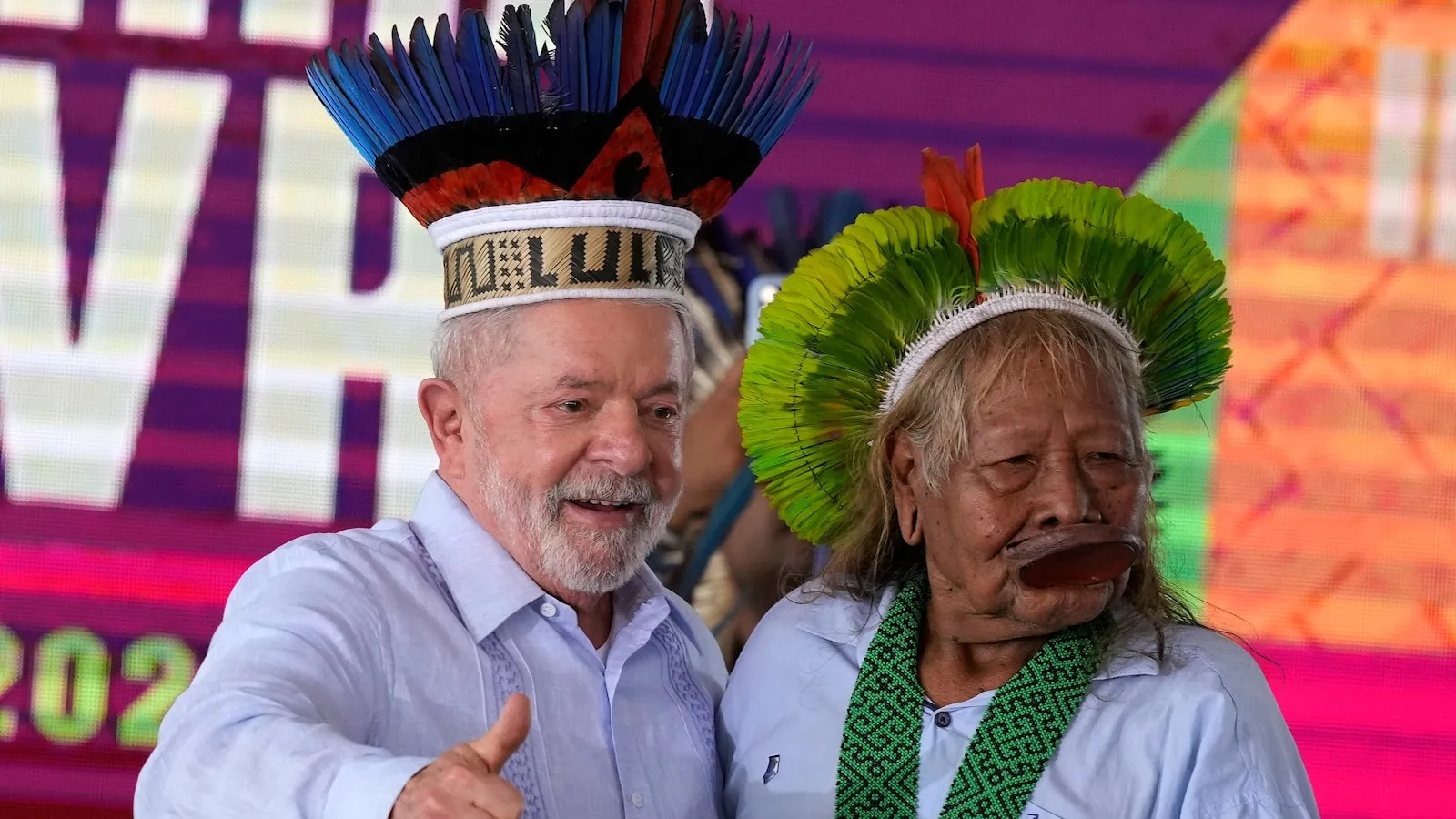
Brazil's Justice Ministry formally recognized the Mebengokre-Kayapo and Yudja-Juruna peoples' permanent possession of the Kapot Nhinore Indigenous Territory on 19 November. President Lula da Silva visited Chief Raoni Metuktire in Peixoto de Azevedo, Mato Grosso, near his Amazonian village.
The declaration is a step toward formal demarcation by presidential decree. The territory covers 362,000 hectares, more than twice the area of Mexico City, and the land covered by recognition is for 60 people. Its size has been a sticking point in land recognition discussions. Indigenous Peoples Minister Eloy Terena said 83% of the territory is forest. A Greenpeace report said more than 47,000 hectares were being used for grazing or soy cultivation.A
Metuktire, 94, is receiving palliative care for gastrointestinal cancer. He was hospitalized for a few days during the week of 9–15 November because of a lung infection and low blood pressure. Speaking from COP31 in Turkey during that period, da Silva said the hospitalization had deeply distressed him and that he had expedited the legal paperwork. Metuktire has lived for decades in the village and fought for three decades to protect his people's ancestral land.
His grandson Roiti Metuktire said the chief had commented on 18 November that he was still awaiting the territory's legal document, which the family regarded as his final wish. He said the recognition surprised the family and receiving it while the chief was alive meant a great deal to them. Da Silva said he wanted to settle the land issue concerning the chief's birthplace while he was still alive.
Da Silva warned of a struggle over the territory's demarcation, saying two hundred-odd properties occupy the land and a Supreme Court case is pending. He pledged at a public event in the territory to work very hard to resolve legal obstacles to completing demarcation. Rural producers campaigning against Indigenous land demarcation have cited serious economic consequences for thousands of non-Indigenous people who live and farm in the territory.A
Brazil has almost 800 Indigenous territories, with 60% fully regularized. Regularization gives Indigenous peoples exclusive use and obliges the state to protect the territories. In 2023, when Metuktire accompanied da Silva at his inauguration, the president's government resumed Indigenous land demarcations after a suspension that had lasted years. It completed 20 demarcations over three years. Indigenous territories in Brazil face strong pressure from agroindustry, illegal gold mining and logging.
Metuktire has dedicated his life to protecting the Amazon rainforest and has maintained a close relationship with da Silva. In the late 1980s, he left his Amazonian home to travel the world, meeting presidents, popes and royalty to warn of threats from destruction of the world's largest tropical rainforest.
Sources
El Comercio · Brasil: Lula visita al cacique Raoni y oficializa la protección de su territorio ancestralEl Comercio · Latin America Peru Spanish · s