Council of Ministers approves criminal organizations registry decree
The Council of Ministers approved four new legislative decrees to combat organized crime on 19 November. One concerns the creation of the Registry of Criminal Organizations with Terrorist Practices.
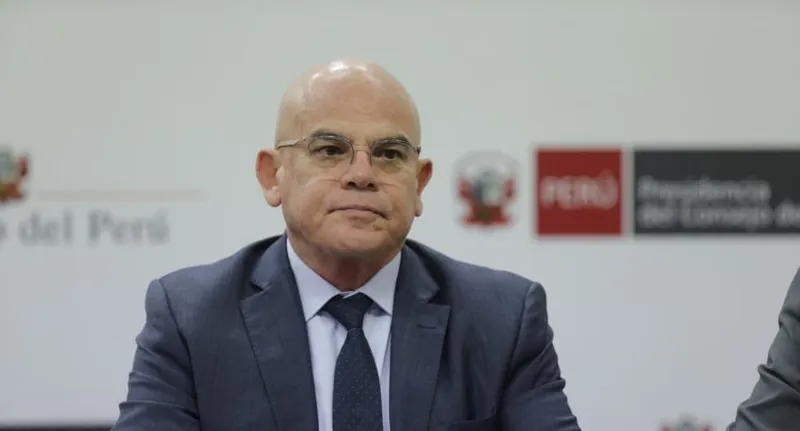
Justice and Human Rights Minister Ernesto Álvarez said the Secretariat of Security and National Defense (Sedena) would propose the registry list, while the National Security and Defense Council (Cosedena) would debate and approve it. He said the registry, to be managed by Cosedena, would include financiers, weapons lessors, bomb makers, money launderers and people lending their bank accounts, based on intelligence. He said intelligence evidence could be submitted to Cosedena's secretariat.
The second decree gives the Defense sector authority to build prisons, with implementation to be coordinated through an emergency decree. Álvarez said Navy Industrial Services (SIMA) and the Army Procurement Unit could supply prison-building efforts and already had authority to build prisons quickly.
Álvarez said two large plots in Huacho had been identified for one or two mega-prisons, with construction intended to proceed as quickly as possible. He said Huacho XIV would be built on neighboring land for first-time offenders and would develop productive prison work using machinery in cooperation with private enterprise.
Huacho X will be a maximum-security mega-prison, completely new, created from the outset with technology from this century, with support from the United States already offered and accepted. This is going to lead the way in Latin America in the treatment of highly dangerous inmatesEn Huacho X se va a referir un megapenal de máxima seguridad, absolutamente nuevo, creado desde el inicio con tecnología de este siglo, con apoyo ya ofrecido y aceptado de Estados Unidos. Esto va a liderar la vanguardia del tratamiento, a nivel latinoamericano, de internos de alta peligrosidad
Justice and Human Rights Minister Ernesto Álvarez
Álvarez said the final two decrees concern strengthening the National Penitentiary Institute (INPE). He confirmed that creation of the National Superintendency of Internment and Resocialization (Sunir) had been canceled. He said Sunir had been left in limbo after a government missed an established deadline. Sunir had been intended to combine INPE with the body administering juvenile centers, but Álvarez said forming the superintendency was considered inefficient because of their different natures.
INPE's main mission is not simply to administer inmates; its mission is to guarantee rehabilitation, especially for first-time inmates. But also, in this crime wave, at this moment of heightened extortion, its mission is to map and gather, through intelligence, the appropriate information that already exists inside, which is where criminal activity is directedEl INPE no tiene por misión principal simplemente administrar internos, tiene como misión garantizar la rehabilitación sobre todo de los internos primarios. Pero también, en esta ola criminal, en este momento de exaltación de la extorsión, tiene como misión el mapear, el reunir la información adecuada que ya existe al interior, que es donde se maneja la acción criminal, mediante inteligencia
Justice and Human Rights Minister Ernesto Álvarez
Sources
 Correo Perú · Ernesto Álvarez: Gobierno descarta construir una cárcel como el CECOT de El SalvadorCorreo Perú · Latin America Peru Spanish · s
 Gestión · Aprueban crear el Registro de Organizaciones Criminales con Prácticas TerroristasGestión · Latin America Peru Spanish · s