5 die as rainfall buries displaced tents in Deir al-Balah
5 people died when tents housing displaced Palestinians in Deir al-Balah in central Gaza were buried under a collapse after rainfall, including 3 children and one woman. Gaza’s Government Media Office said about 70,000 tents sheltering displaced Palestinians were flooded in the Gaza Strip. Medical sources said five Palestinians were injured when two walls of buildings damaged by earlier Israeli strikes collapsed and a sheet of corrugated metal fell during the storm.
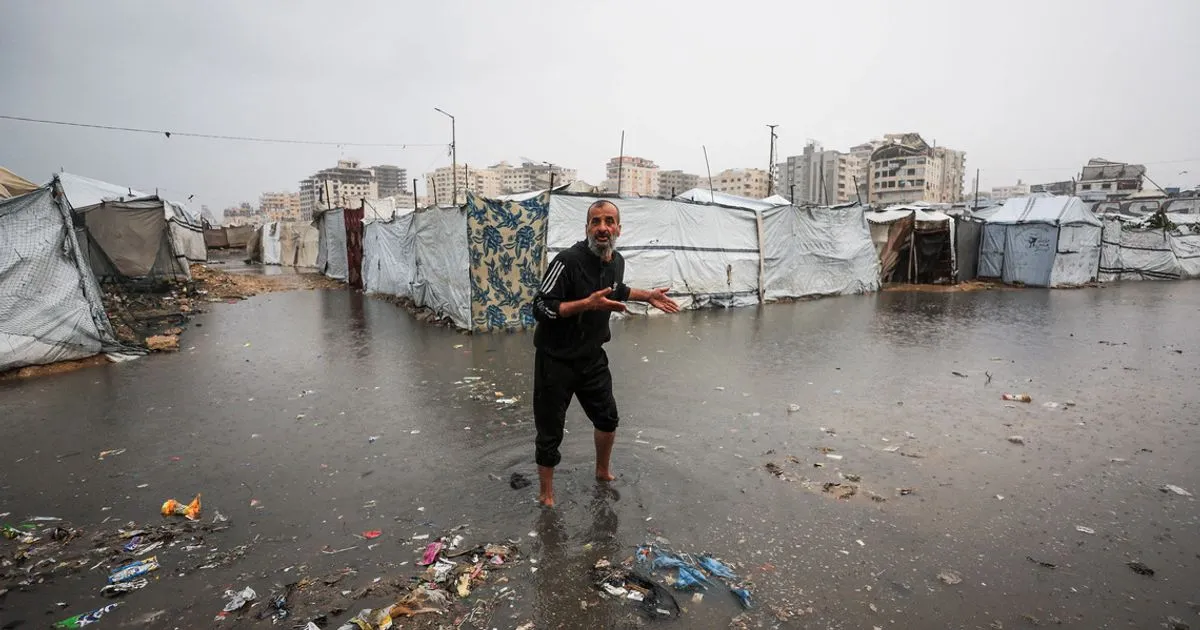
Hundreds of displaced families were forced to flee flooded camps in Gaza City and across the central and northern Gaza Strip as rainwater inundated temporary shelters. Wafa said rainwater seeped into tents in low-lying areas and damaged displaced families' belongings. It reported fears of worsening conditions as a low-pressure system continued to affect Palestinian lands. The system was accompanied by a cold air mass.D

Makeshift shelters housing war-displaced people in Alwisam camp in central Gaza were flooded. Displaced resident Raed Almaquousi was surprised by torrential rain in the middle of the night. Almaquousi said they woke to find water above their mattresses and were digging a trench to drain water from the camp. Saoud Almaqousi was living under another tent with a daughter who is in a wheelchair.
Gaza Municipality spokesman Hosni Muhanna said Gaza City received 60 millimeters of rain in 12 hours. Local authorities in Gaza said the effects of the low-pressure system affected about 350 thousand displaced people on 7 November.A
MP Islam El-Talwani cited warnings that more than 1,000 displaced sites are at risk of flooding. The warnings said about 1,100,000 Palestinians are inside the sites. World Health Organization spokesperson Christian Lindmeier said nearly 1 million displaced people across Gaza faced medium or high flood risk.

Civil Defense in Gaza urged institutions to act to rescue citizens as it received many distress calls about flooded tents. Civil Defense said it received 2166 distress calls from families whose tents were damaged by rain and its teams could respond to only 218 reports, with limited capabilities. Municipal and civil defence officials said they were unable to cope with the storm because of fuel shortages and damage to equipment. A spokesman for the Egyptian Committee in Gaza said more than 480,000 Palestinian families needed urgent humanitarian assistance and the Health Minister said one million displaced people have no roof over their heads. Civil Defense said Gaza needs about 300 thousand tents to shelter displaced people, and Gaza’s Government Media Office estimated that about 260,000 damaged tents need replacing.A
Wafa said tens of thousands of Palestinians whose homes were destroyed live in temporary tents made of nylon and thin fabric that lack basic protection from rain, in very difficult humanitarian conditions. Displaced Palestinians also shelter in worn-out tents without heating or adequate protection from cold. The flooding worsened their humanitarian suffering during harsh weather and a lack of resources and protection. Displaced Gaza resident Rafiq Ghattas said they had no resources, tarpaulins or tents, and no one was checking on them. Displaced resident Rana Hamid described her daughter's condition in the cold.
My little daughter stiffened from the cold, I wrapped her in blankets, but in vain, everything became water.بنتي الصغيرة تشنجت من السقعة، لفّيتها بالحرامات، لكن على الفاضي، كل شيء صار ميّة
displaced resident Rana Hamid
Hamas blamed Israel for not allowing shelters and construction materials into Gaza. COGAT, the Israeli military agency that coordinates aid, said on 6 November it had stepped up efforts to improve sanitary conditions across Gaza before the expected heavy rain, in coordination with international organisations. COGAT said more than 91,000 tents had already been let into Gaza.
UNICEF's James Elder said the Sheikh Radwan stormwater basin in Gaza City was contaminated with sewage and at risk of overflowing after heavy rainfall. Elder said COGAT rejected a $3 million plan to repair it. Four of the basin's pumps were out of service. The basin has a capacity of about half a million cubic metres. Elder warned that toxic sewage could flow into streets and tents, forcing families from homes and increasing the threat of disease.
The Egyptian Red Crescent launched the Zad Al-Ezza convoy 310 from Egypt to Gaza on 11 November, carrying more than 2,284 tons of aid. The organisation has supplied more than 2,341 tents and more than 374,400 pieces of winter clothing to support Gaza residents facing heavy rain and a low-pressure system, and is providing blankets. It has brought more than one million tons of humanitarian and relief aid into the Gaza Strip. More than 75 thousand of its volunteers contributed to preparing and bringing humanitarian aid into the Gaza Strip.
Dozens of cracked walls or roofs collapsed in the Gaza Strip, and rain affected damaged buildings at risk of collapse in northern Gaza. Three abandoned houses collapsed without causing injuries. The war caused widespread destruction of homes and infrastructure. More than two million people, most of Gaza’s population, were displaced during the war that began in October 2023. More than 74,000 Palestinians have been killed and over 175,000 others wounded since then.
You see, this is the result of the stormIhr seht, das ist das Ergebnis des Sturms
Mohammed Badwi
Sources
Al-Shorouk · الهلال الأحمر يطلق قافلة «زاد العزة» 310 بحمولة تتجاوز 2284 طنا من المساعدات.. وإمدادات شتوية لمواجهة أزمة الأمطارAl-Shorouk · North Africa Egypt Arabic · s 
 Sky News Arabia · حوض الشيخ رضوان.. هل تتحول أمطار غزة إلى كارثة صحية؟Sky News Arabia · Middle East United Arab Emirates Arabic · s The Straits Times · UNICEF says Israel blocks Gaza basin repairs, warns of flood riskAsia Pacific Singapore Al-Shorouk · الهلال الأحمر يواصل استجابته لأزمة الأمطار بغزة بأكثر من 2,527 طنا من المواد الإغاثية والغذائية عبر قافلة زاد العزة 309Al-Shorouk · North Africa Egypt Arabic · s
 Yeniçağ · Gazze'de yağış sonrası göçük: Çadırlar altında kalan 5 kişi hayatını kaybettiYeniçağ · Türkiye Turkish · s El Balad · البرلمان العربي يطلق نداء عاجلا لإنقاذ النازحين بغزة من مخاطر البرد والسيولEl Balad · North Africa Egypt Arabic · s
 Le Matin d'Algerie · Gaza : des pluies torrentielles inondent les camps de déplacés, 70 000 personnes affectéesLe Matin d'Algerie · North Africa Algeria French · s Tagesschau (ARD) · Überschwemmungen in Gaza schüren Sorge vor neuer KatastropheTagesschau (ARD) · Europe Germany German · s
 Anadolu Ajansı · Gazze'de yağış sonrası meydana gelen göçükte 5 Filistinli hayatını kaybettiAnadolu Ajansı · Türkiye Turkish · s
 Telma · Уште една тешка ноќ за раселените семејства во Газа, обилен дожд ги поплави шаторите и импровизираните засолништаTelma · Balkans North Macedonia Macedonian · s
 SVT Nyheter · Tältläger översvämmade i Gaza: ”Akuta förhållanden”SVT Nyheter · Europe Sweden Swedish · s Sky News Arabia · غزة تحت المطر..خيام تغرق وعائلات تواجه الشتاء بلا مأوىSky News Arabia · Middle East United Arab Emirates Arabic · s
 Madhyamam · കനത്ത മഴയിൽ പതിനായിരക്കണക്കിന് ടെന്റുകൾ വെള്ളത്തിൽ മുങ്ങി; ഗസ്സയിൽ ജനജീവിതം ദുസ്സഹംMadhyamam · India Malayalam · s
 20 Minuten · Gazastreifen: 70'000 Zelte von Vertriebenen nach Regen überflutet20 Minuten · Europe Switzerland German · s The Express Tribune · Flooded out of their tents, Gaza families have nowhere left to goSouth Asia Pakistan Sky TG24 · Maltempo a Gaza, accampamenti allagati nel centro della StrisciaSky TG24 · Europe Italy Italian · s

 Insajder · Obilne kiše potopile šatore u Pojasu Gaze, desetine hiljada ljudi ostalo bez skloništaInsajder · Balkans Serbia Serbian · s
 El Comercio · Lluvias torrenciales en Gaza dejan a cerca de 70,000 familias sin cobijoEl Comercio · Latin America Peru Spanish · s
 ZDFheute · Tausende Notzelte unbewohnbar, Hunderte Familien obdachlosZDFheute · Europe Germany German · s

 Oman Daily · محاولات يائسة للبقاء في خيام مهترئة في غزة.. لا شيء يصد المطر عن النازحينOman Daily · Middle East Oman Arabic · s El Balad · معاناة النازحين تتفاقم.. 950 ألف فلسطيني في مناطق مهددة بالفيضانات في غزةEl Balad · North Africa Egypt Arabic · s
 LBCI · Heavy rain floods tents housing Gaza displaced people, aid shortages hamper responseLBCI · Middle East Lebanon Arabic · s
 Argumenty i Fakty · В секторе Газа затопило более 70 тыс. палаток с беженцамиArgumenty i Fakty · Russia Russian · s The Straits Times · Heavy rain floods tents housing Gaza displaced people, aid shortages hamper responseAsia Pacific Singapore
 Asharq Al-Awsat · أزمة إنسانية قاسية... الأمطار تُغرق مخيمات نزوح كاملة في غزةAsharq Al-Awsat · Middle East Saudi Arabia Arabic · s El Balad · برلماني يطالب بتحرك دولي عاجل لإنقاذ نازحي غزة من كارثة الأمطار.. ويدعو لتوفير الخيام ومستلزمات الإيواءEl Balad · North Africa Egypt Arabic · s El Balad · القاهرة الإخبارية: اللجنة المصرية تتلقى استغاثة لإنقاذ الفلسطينيين من الأمطار والسيولEl Balad · North Africa Egypt Arabic · s Al-Shorouk · النائب إسلام التلواني يطالب بتحرك دولي عاجل لإنقاذ نازحي غزة من كارثة الأمطارAl-Shorouk · North Africa Egypt Arabic · s Sky News Arabia · غزة.. غرق آلاف الخيام مع استمرار غزارة الأمطارSky News Arabia · Middle East United Arab Emirates Arabic · s El Balad · غرق ودمار مئات الخيام الفلسطينية في قطاع غزة نتيجة السيول والأمطارEl Balad · North Africa Egypt Arabic · s
In this story
Middle East