Global fossil emissions forecast to fall 0.4% in 2026
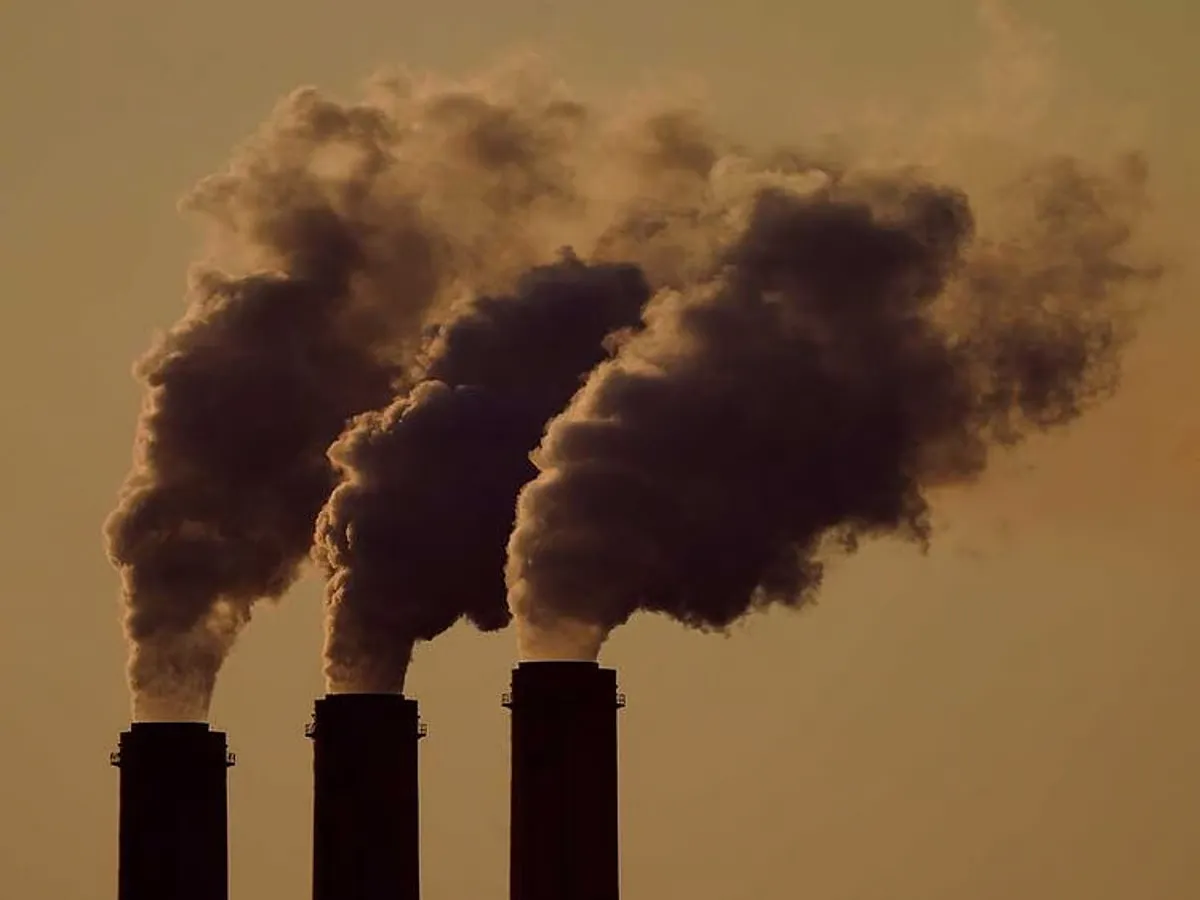
Researchers said on 10 November that global fossil fuel carbon emissions are expected to fall by 0.4% in 2026 because of renewable energy expansion and an oil price shock from the Iran war. Fossil carbon dioxide emissions are forecast to reach 38.2 billion tonnes.
Researchers said the United States-led war in Iran and the closure of the Strait of Hormuz reduced oil consumption as crude prices soared, helping drive emissions down. Before the war, a fifth of oil and liquefied gas consumed worldwide transited the strait. The energy shock brought a price surge in Europe and the United States, while Asia faced a supply crisis and shortages.


The report projected oil-related carbon emissions would fall by 1.9%. Gas emissions are projected to fall by 0.3%, while coal emissions are forecast to rise by 0.6%. Researchers said the oil emissions drop was likely a short-term response to the Iran conflict's energy shock. The decline would be the first annual drop since 2020, when the Covid-19 pandemic paralysed the global economy, trade and transport. Fossil emissions rose by 0.9% a year on average in the past decade and reached a record high in 2025, the Global Carbon Budget report said.
Deployment of solar panels, wind farms and electric vehicles also contributed to the emissions drop. The report said two thirds of the increase in global energy demand is being met by solar and wind power and electric vehicles. Pierre Friedlingstein, director of the Global Carbon Budget Office at the University of Exeter, said the long-term answer was the rapid deployment of clean energy technologies.
A decline in fossil CO2 emissions is encouraging, but a reduction driven partly by geopolitical shocks is not a sustainable climate solution
Pierre Friedlingstein, director of the Global Carbon Budget Office at the University of Exeter
Corinne Le Quere, a climate change science professor at the University of East Anglia, said a rebound was likely after oil tensions ease. Le Quere said emissions rebounded when economies recovered after shocks including Covid-19 and the global financial crisis.
Emissions in China, the largest carbon dioxide emitter, are forecast to fall by 0.9%. The United States and the European Union are expected to see declines of 1.3% and 1.5%, respectively, while emissions in India are expected to grow by 4.4%.
Total carbon dioxide emissions, including land-use change, are projected to rise from 42.8 billion tonnes in 2025 to 43.3 billion tonnes in 2026, an increase of almost 1.2%. Researchers forecast that land-use emissions would rise partly because of peat fires and forest degradation in South-East Asia linked to exceptionally strong El Nino conditions.
The report puts the remaining carbon budget at 150 billion tonnes of carbon dioxide to keep warming below 1.5C above pre-industrial levels. At current emission rates, that budget would be exhausted in less than four years, researchers said. The United Nations declared in September that the long-term 1.5C target would be missed in a matter of years.
At climate talks in Paris in 2015, nations agreed to keep warming well below 2C above pre-industrial levels and pursued efforts to limit it to 1.5C. Scientists say cutting fossil fuel greenhouse gas emissions is needed to limit the period of overshoot above 1.5C and bring temperatures down quickly. Limiting overshoot and returning below 1.5C by the end of the century would require greenhouse gas emissions cuts of 18% by 2030, 45% by 2035 and 69% by 2040 compared with 2025 levels. It would also require removing and permanently storing about 320 billion tonnes of carbon dioxide.
The average temperature in 2024 was 1.6C above pre-industrial levels. Average warming for 2026 will almost certainly be 1.56–1.61C, making it likely the second warmest year on record after 2024. The years 2023 to 2025 were the first three-year period with an average temperature above the 1.5C threshold. Copernicus said October 2026 was the warmest October on record, with the global average temperature 1.75C above pre-industrial levels. It was the third consecutive month with a temperature rise exceeding 1.5C, Copernicus said.
The COP31 climate summit began on 9 November in Antalya, Turkey. Australia chairs the official negotiations. Main topics include faster emissions cuts, access to climate protection money for developing countries and tripling adaptation finance by 2035. States are also to define just transition rules, including aid for fossil sector workers, and start the next global stocktake of Paris Agreement implementation.
Sources
OKO.press · Wojna w Iranie i rozwój OZE spowodują spadek emisji CO2 z paliw kopalnych w 2026. Do przełomu dalekoOKO.press · Europe Poland Polish · s Diario Libre · Emisiones de origen fósil caen en 2026 por la guerra en IránDiario Libre · Latin America Dominican Republic Spanish · s Euronews Türkçe · Küresel fosil yakıt emisyonları 2026'da düşecek, CO2 toplamı hâlâ artıyorEuronews Türkçe · Europe France Turkish · s  Iran International (Persian) · جنگ ایران عامل اصلی کاهش انتشار ناشی از سوختهای فسیلی اعلام شدIran International (Persian) · Europe United Kingdom Persian · s
 SVT Nyheter · Krig i Iran bakom utsläppsfall av fossila bränslen – inte klimatomställningenSVT Nyheter · Europe Sweden Swedish · s The Straits Times · Fossil fuel emissions fall due to Iran war, renewables: ResearchAsia Pacific Singapore Gulf News · Fossil fuel emissions fall due to Iran war, renewables: researchMiddle East United Arab Emirates