Malaysia agrees to relax rare earth curbs for France
Malaysia agreed on 17 November to relax export restrictions on raw rare earths to support joint development with France. The countries also upgraded their relations to a strategic partnership and announced cooperation agreements.
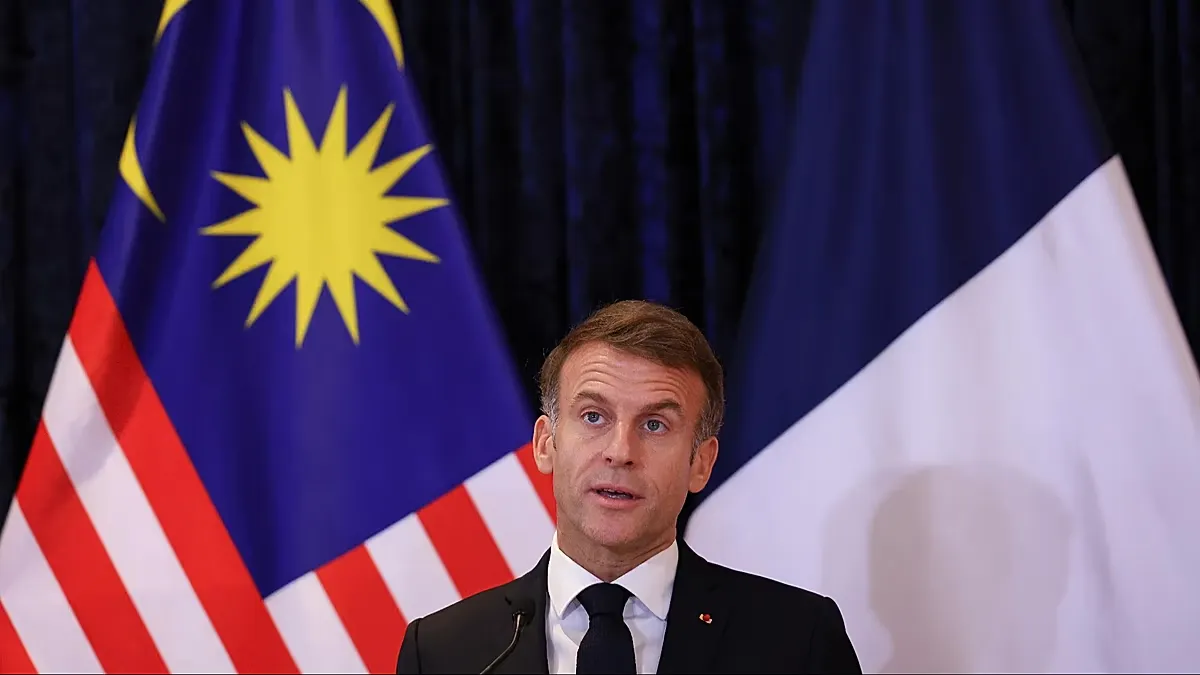
Malaysian Prime Minister Anwar Ibrahim and French President Emmanuel Macron met in Kuala Lumpur and sought stronger ties in defence, trade, the energy transition and critical minerals. Ibrahim said the export agreement followed a French commitment to collaborate on rare earth processing. Macron said the renewed partnership would strengthen independence on both sides and improve the countries' defence and security. He wrote on social media on 14 November that diversifying rare earth supply sources was a particular purpose of his visit. France and Malaysia will mark seven decades of bilateral relations a year after the visit.

French company Carester and Malaysian company Malaco Mining announced plans in July 2026 for a 10-year partnership to establish a rare earth separation facility in the northern state of Perak. Macron said the companies' project would encompass extraction and processing in Malaysia. He said the joint mining and processing venture was scheduled to begin operations in early 2027, announcing the timetable in Kuala Lumpur during a two-day visit, his first to Malaysia since 2017. The project is expected to contribute 13 thousand tonnes of processed mineral production, including minerals used in high-performance magnets.
Malaysia's government estimates its rare earth reserves at approximately 1610 ten-thousand tonnes. Malaysia's Natural Resources Ministry reported to parliament in January 2026 that detailed exploration had covered 9 states and 103.9 square kilometres, establishing proven rare earth resources of 27.4144 ten-thousand tonnes. The International Energy Agency said China accounted for 85% of global refined rare earth production in 2025.
Jason Bedford, a visiting senior research fellow at the National University of Singapore's East Asian Institute, said Malaysia could become an important source of heavy rare earths such as yttrium. Yttrium is used in semiconductor manufacturing and the aerospace industry. Bedford said China remained dominant in specialised separation of yttrium, samarium and lutetium, ultra-high-purity refining and conversion of oxides into metals. He said France might remain dependent on China for processing even if it obtained substantial Malaysian rare earth supplies. He forecast the fiercest competition for commercially viable ion-adsorption clay deposits, especially those with attractive dysprosium and terbium content and high yttrium content.
Australian company Lynas operates a large rare earth processing plant in Malaysia's Pahang state, processing ore mined in Australia rather than Malaysian deposits. Bedford said China had established a foothold in Malaysian rare earth production through MCRE Resources. The company's clay mining project relies on Chinese technical support and supplies raw materials to one Chinese processing partner. The chief executive of DTEC, a Malaysian startup controlled by US citizens, said in October 2026 that the company had permission to export Malaysian rare earth materials to the United States for research.
In October 2025, the United States secured Malaysian commitments on critical-mineral exports and investment through a trade agreement. US efforts to build domestic rare earth processing capacity have encountered delays and other setbacks. Lynas said in its 2026 annual report that its planned Texas heavy rare earth processing facility would not proceed and US defence funding would instead support a supply agreement worth 9600 ten-thousand US dollars.
Sources
BusinessWorld · Malaysia loosens rare earths curbs for France amid upgraded tiesAsia Pacific Philippines  Anadolu Ajansı · Fransa Cumhurbaşkanı Macron, Çin'in ya da ABD'nin vasal devleti olmak istemediklerini söylediAnadolu Ajansı · Türkiye Turkish · s Euronews Türkçe · Fransa ve Malezya'dan nadir toprak elementleri anlaşması: Macron Çin'e alternatif arıyorEuronews Türkçe · Europe France Turkish · s
 La Nouvelle Tribune · En Malaisie, Macron refuse que la France devienne « vassal » de la Chine ou des États-UnisLa Nouvelle Tribune · Africa Benin French · s