Uganda launches first national cocoa strategy
The Ministry of Agriculture, Animal Industry and Fisheries (MAAIF) launched Uganda's first national cocoa strategy on 18 November. The strategy aims to increase annual production from approximately 72,000 metric tonnes to 500,000 metric tonnes by 2036.
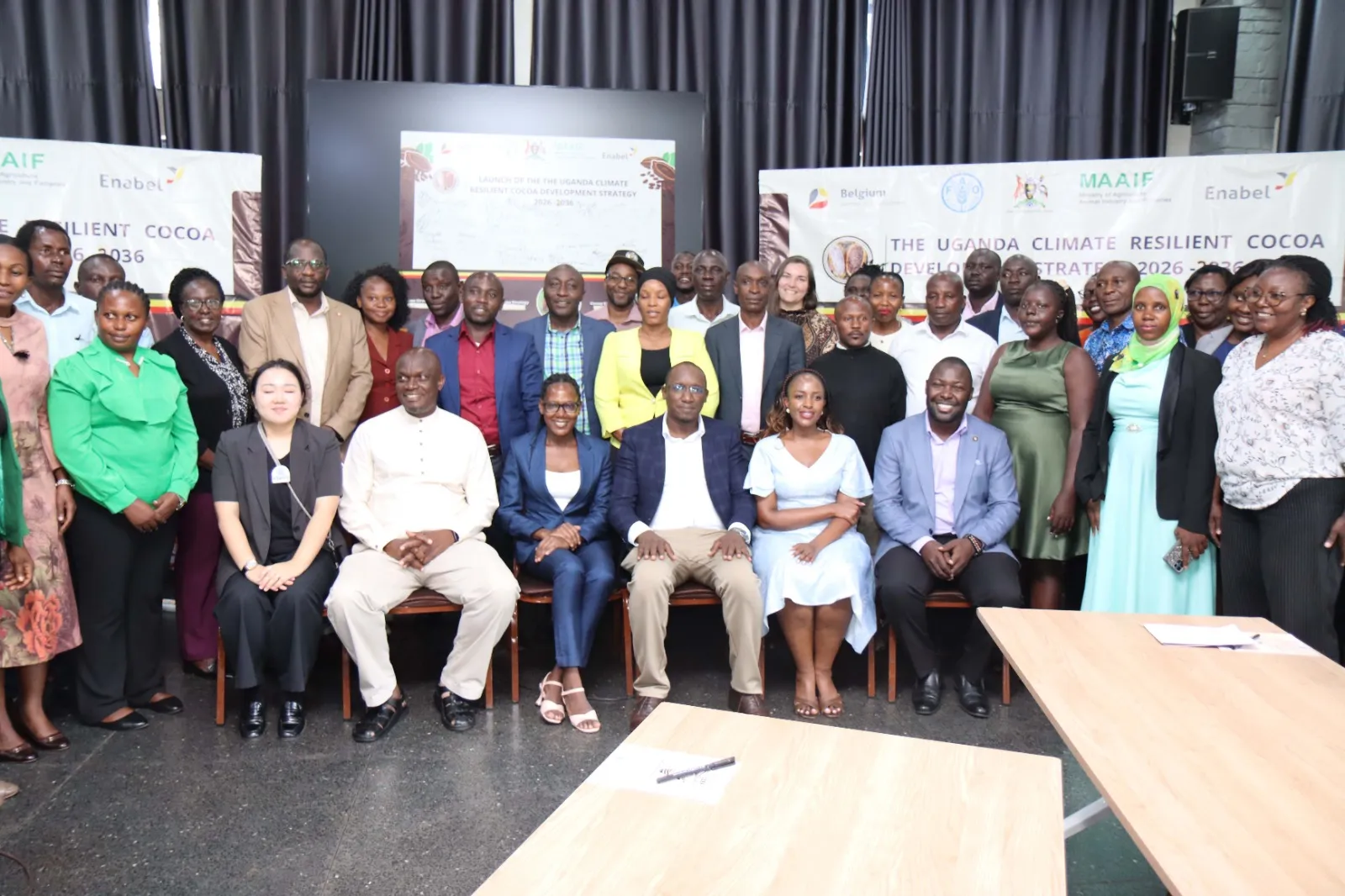
The strategy also targets $3 billion in annual exports, with delivery dependent on investment and farm-level change. It aims to increase domestic processing from less than five per cent to 30 per cent of national production. It targets an increase in average productivity from 530 kilogrammes to 1,000 kilogrammes per hectare. The plan also seeks to raise the participation of women and young people in the cocoa value chain to at least 45 per cent. I
The strategy estimates that meeting its targets will require $221.19 million in public and catalytic investments over ten years. It calls for substantial private-sector investment, complemented by coordinated support from government, development partners, research institutions, financial institutions and farmer organisations. The plan seeks to retain more economic value in Uganda through domestic processing and manufacturing. Investment in fermentation, drying, aggregation and processing facilities, including cocoa liquor and chocolate manufacturing, is expected to strengthen value-addition capacity, create employment and improve farmers' returns. The strategy also seeks to make cocoa a major driver of agro-industrialisation and export diversification.
Uganda's cocoa export earnings rose from $70.6 million in the 2015/2016 financial year to $620.4 million in 2024/2025. Cocoa is the country's second-largest agricultural export and its third-largest foreign exchange earner after gold and coffee. The sector supports more than 100,000 farming households.I
Achieving the targets will require addressing low farm productivity, inadequate post-harvest handling, limited domestic processing, weak farmer organisation and restricted access to finance. The strategy responds to growing climate risks and increasingly stringent international market requirements on traceability and deforestation-free production. It promotes climate-smart farming, agroforestry, sustainable land management, improved planting materials and environmentally responsible production systems.
The Food and Agriculture Organization of the United Nations (FAO) supported the strategy's development through its Technical Cooperation Programme. Enabel and other sector partners also supported its development. The process included technical reviews, expert consultations and engagement with government, the private sector, farmer organisations, academia and development partners. Regional engagements in Eastern Uganda, Western Uganda and Northern Uganda will follow the launch to raise awareness, strengthen local ownership and identify implementation opportunities and priorities in existing and potential cocoa-growing areas.I
FAO reaffirmed its support for Uganda's ambition to become competitive in the global cocoa market. Dr Joseph Mudiope, crop production specialist at FAO's Representation in Uganda, said competitiveness required sustained investment in research, innovation and value addition beyond production growth. FAO also said national institutions and systems supporting the sector's long-term development and competitiveness needed strengthening. Enabel said the strategy offered an opportunity to build on existing partnerships and strengthen links between agricultural development, private-sector growth and employment creation. Enabel Agribusiness Expert Sylivia Natandula addressed how the strategy's success should be measured.
Ultimately, our success should not be measured only by the tonnes of cocoa produced or exported, but by the incomes improved, businesses strengthened, decent jobs created and communities transformed
Enabel Agribusiness Expert Sylivia Natandula
Sources
In this story
Africa


Economy