Blacklisted Chinese university buys two H200 chips
Procurement records show that Northwestern Polytechnical University in Xian bought two H200 AI chips in October despite being on the United States export blacklist. A procurement record put the cost at 874,700 yuan and named Shaanxi Bosuan Network Technology as the supplier for the university's management school, rather than Nvidia.
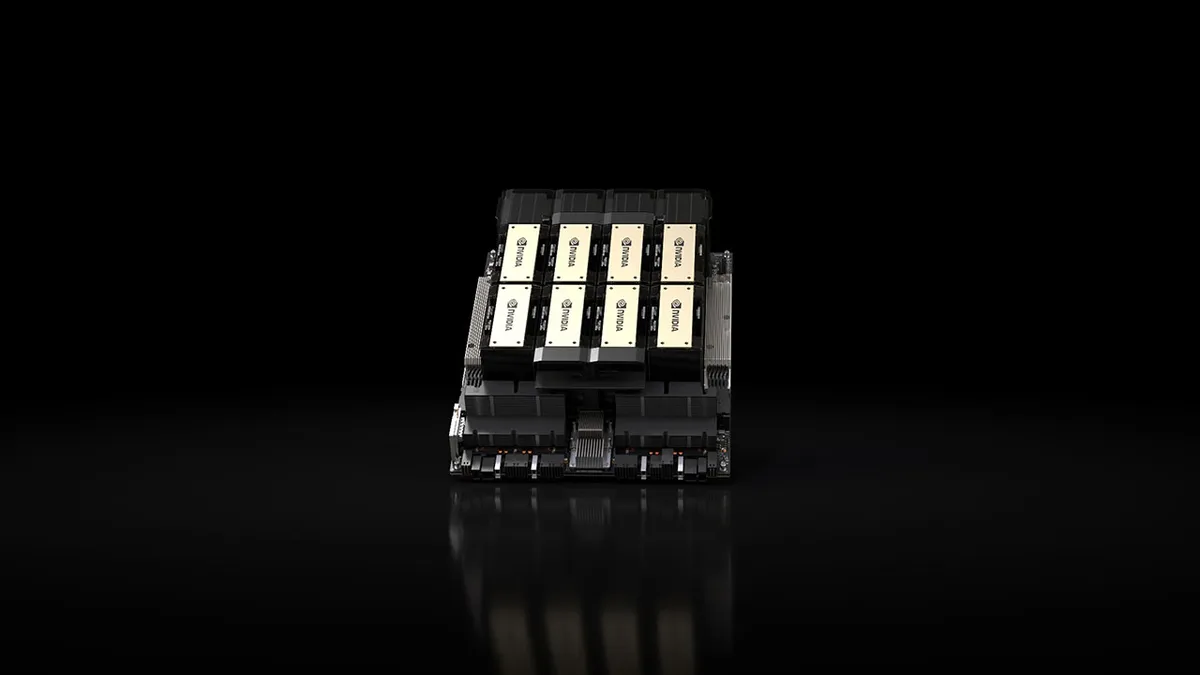
In 2026, the university also bought access to H200 and other Nvidia AI processors through five contracts for rented computing capacity from Chinese companies, procurement records show. Its cybersecurity school awarded two seven-month contracts in January for access to servers containing eight H200 chips each, the records show. The contracts, worth 441,700 yuan and 441,000 yuan, covered fine-tuning AI models and reinforcement-learning training. The university also rented access to servers containing eight Nvidia A100 chips and eight A800 chips. The records showed that computing services awards went to several little-known Chinese technology suppliers.
The contract was worth 375,000 yuan. The A100 and A800 are banned from export to all Chinese entities, while the H200 is the most advanced chip cited in the university's procurement records.
The university is a member of China's Seven Sons of National Defence group and has deep ties to the People's Liberation Army. It conducts research related to military aircraft, missiles and satellites. The United States Commerce Department added it to its trade blacklist, the Entity List, in 2001 over alleged involvement in missile-proliferation activities and military research. The United States tightened the restrictions in 2019, putting licences for controlled technology exports to the university under a policy of denial in most circumstances.
United States President Donald Trump's administration began allowing some H200 exports to China on a case-by-case basis in January. The policy did not lift separate restrictions on Entity List organisations. The rules require safeguards to prevent blacklisted entities and military end-users from remotely accessing chips exported under the policy, which also covers less advanced models. Reuters reported that H200 chips are among Nvidia's most capable for training and running advanced AI systems and require United States export licence approvals, which are normally denied for blacklisted institutions.
A Reuters review of 26 Chinese procurement and corporate records found universities and research institutions buying United States-restricted Nvidia chips or renting access to computing services using restricted chips through domestic suppliers. Reuters said several of the institutions had close links to China's defence industry or military research. The news agency also reported that small quantities of H200 chips had reached China through indirect routes while Beijing withheld approval for large-scale imports.
Procurement records show that Shenzhen University bought three H100 processors for 769,800 yuan in September. Wuhan University of Technology bought a server containing an H100 chip for 355,000 yuan in June and four A100 chips in a separate purchase for 344,000 yuan. Beihang University bought four A800 processors for 489,000 yuan in April. Beihang is also a member of the Seven Sons of National Defence group and has close ties to China's aerospace and defence industries. It conducts research for military aviation and space programmes.
Two government procurement announcements in July and September named suppliers selected to provide the University of Chinese Academy of Sciences with computing services using Nvidia H800 and A800 chips restricted from export to China. One announcement listed H800 access at 10 yuan per chip-hour. A January procurement award named a supplier of six A100 chips for a Shenzhen-based public institution, with an award of 484,800 yuan.
Nvidia and its chief executive Jensen Huang face mounting scrutiny in Washington over his lobbying for looser restrictions on AI chip sales to China, following reports alleging he was targeted by a Chinese spying operation. Huang has argued that continued United States sales to China would preserve American technological leadership and keep Chinese customers reliant on United States technology. Three Republican congressional committee chairmen requested a briefing with Huang on 18 November over his reported contacts with an alleged Chinese intelligence operative.
Some United States lawmakers say access to Nvidia's most powerful AI chips can speed China's development of AI systems for weapons design, intelligence analysis and military modernisation. Democrats and Republicans in Congress have urged stronger controls on China's access to advanced AI chips, including chip-tracking requirements and greater congressional oversight of exports. Northwestern Polytechnical University, Nvidia and the United States Commerce Department's Bureau of Industry and Security, which oversees export controls, did not respond to requests for comment. Reuters could not determine contact details for Shaanxi Bosuan Network Technology.
Sources
BusinessWorld · PLA-linked Chinese university bought Nvidia H200 chips despite US blacklist, records showAsia Pacific Philippines In this story
China