New Zealand election too close to call with 99.8 percent counted
New Zealanders elected a new parliament on 7 November, with the election too close to call after 99.8 percent of votes had been counted. Preliminary indicators put the National Party ahead in parliamentary seats, although the Labour Party led in total votes.
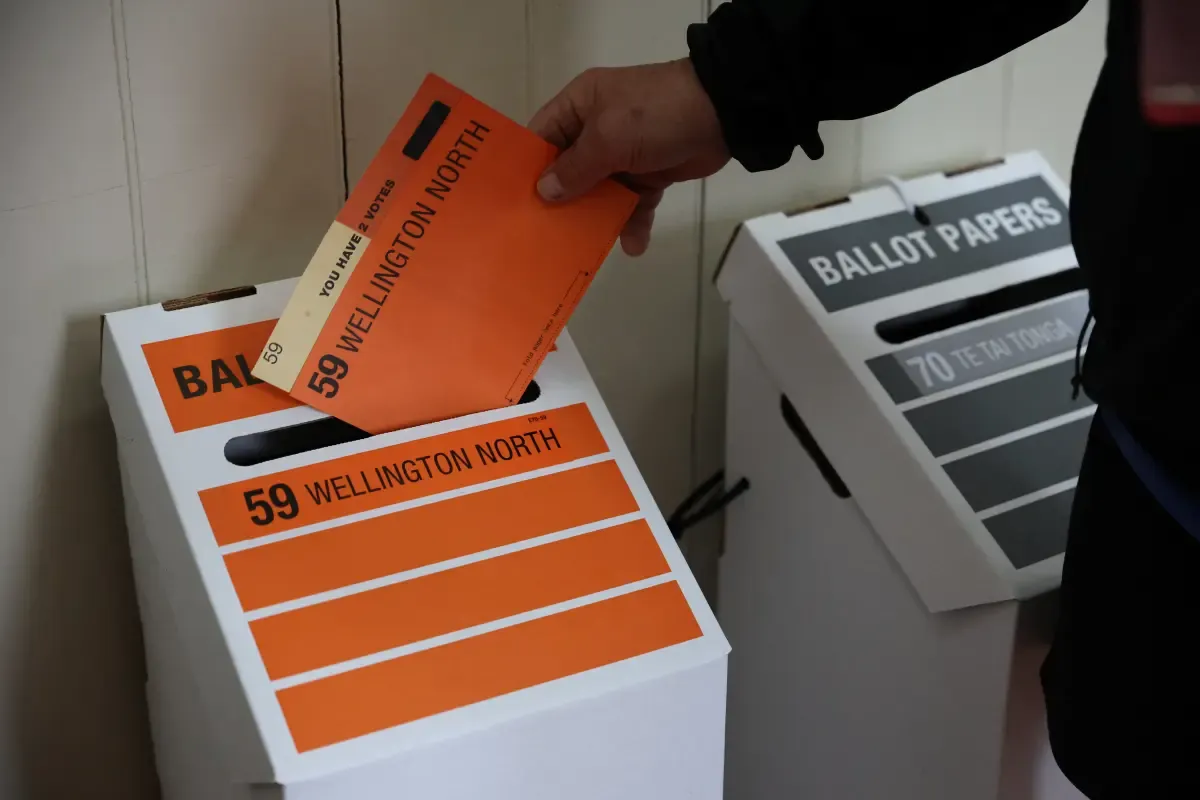
At a preliminary stage, about 35.3 percent of results had been counted, with each party on slightly less than 30 percent of the vote. The difference between their vote totals was 3,439 votes. At that point, the incumbent right-wing coalition was forecast to have a narrow majority of one seat beyond the number required.


A National Party candidate led a Labour Party candidate by 139 votes in Wairarapa. In Wellington Bays, a Labour Party candidate led by 140 votes. Another Labour Party candidate led a National Party candidate by 262 votes.
New Zealand uses mixed member proportional voting, with most governments formed as coalitions. Parliament normally has 120 seats, and at least 61 mandates are required for a governing majority. The centrist Opportunity Party crossed the 5 percent threshold to enter parliament for the first time. The Labour Party formed a bloc with the New Zealand Greens and Te Parti Maori.
Prime Minister Christopher Luxon, who leads the centre-right National Party, said the party remained the largest in parliament and had a path to form the next government. Labour Party leader Chris Hipkins said the people had spoken but "it may take a bit longer to work out what they’ve said". Luxon had initially ruled out cooperation with the Opportunity Party because of its tax policy. Commentators nevertheless expected Luxon and the Opportunity Party to talk.
The election took place during a sharp economic slowdown, high living costs and broad political dissatisfaction, with a shift away from large parties. The National Party and Labour Party had near-historic lows in support, and the election was marked by deep disappointment with the two large parties.
Timeline
- Polling places opened at 09:00 local time and closed at 19:00 local time, corresponding to 20:00 GMT on Friday and 06:00 GMT on Saturday.
- Preliminary results were released progressively on New Zealand's official election results website.
- Official results, including votes from abroad, are expected on 27 November, when it will be clear who can form the government.
- Overhang mandates could enlarge parliament to about 130 seats.
- The result could still change with the counting of special votes from New Zealanders living abroad and people who voted outside their own constituency.
- Opportunity Party leader Qiulae Wong said she would work with either side.
- The National Party could continue to work with its previous coalition partners, the right-libertarian ACT Party and populist New Zealand First.
- Weeks-long coalition negotiations could lie ahead.
Sources
El Balad · رئيس وزراء نيوزيلندا: الانتخابات متقاربة للغاية.. والنتائج النهائية تحسم تشكيل الحكومة في 27 نوفمبرEl Balad · North Africa Egypt Arabic · s WINN FM · New Zealand PM says election ‘too close to call’ as almost all votes countedLatin America St. Kitts & Nevis Maariv · הבחירות בניו זילנד: ספירת 35.3% מהקולות - לקואליציה המכהנת רוב דחוקMaariv · Middle East Israel Hebrew · s