Serbia holds elections for 23 minority councils
Serbia held national minority council elections on 8 November. Voting took place at 949 polling stations to elect members of 23 councils.
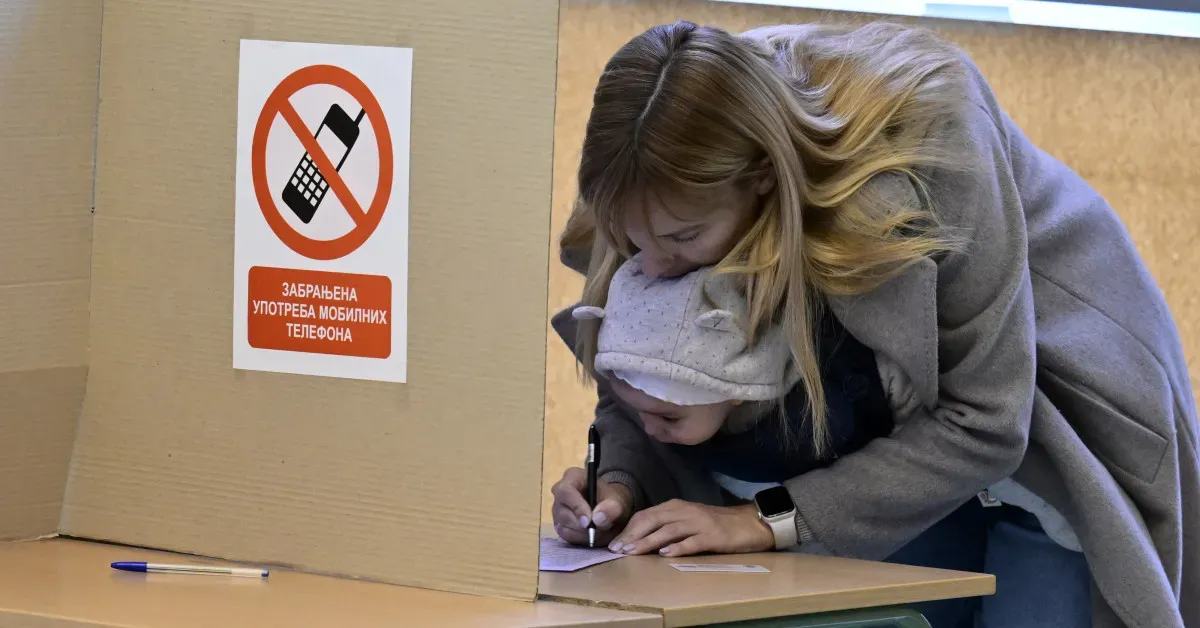
Insajder reported 481,785 registered voters; RFE/RL Serbian put the number at 481,789. Members of 21 councils are elected directly, while the Gorani and Russian minorities elect representatives through electoral assemblies. A total of 52 electoral lists were proclaimed. Six national minorities have only one list, while the others have at least two. The Republic Electoral Commission will publish the election results no later than 96 hours after polling stations close.

A total of 114,777 citizens have the right to vote for the Bosniak National Council. The figures for voters who will vote for the Hungarian, Roma and Albanian minority national councils are 108,974, 60,979 and 37,759, respectively. The corresponding figures for the Slovak, Croatian, Vlach and Romanian councils are 26,044, 22,863, 21,046 and 20,347.
Registered voters for the Bulgarian, Montenegrin, Macedonian and Rusyn minority national councils numbered 15,743, 11,230, 9,368 and 6,933, respectively. The figures for the Bunjevac, Greek, Egyptian and Ashkali councils were 6,595, 3,752, 3,554 and 2,906. For the Slovenian, Ukrainian, German and Czech councils, they were 2,856, 2,237, 2,026 and 1,498.
In Subotica, 63 polling stations opened and 40,907 voters from 23 national minorities were registered. The registered voters included 23,910 from the Hungarian community, 9,054 Croatian, 5,258 Bunjevac and 1,079 Roma.
The Bunjevac national minority council has 19 members, and three lists were proclaimed for it. The Hungarian national minority council has 35 members, with voters choosing between two lists. The Croatian National Council has 23 members, and three electoral lists were proclaimed for it.
In Novi Pazar, 63,529 citizens were registered in the special voter register and voting took place at 67 polling stations. For the new convocation of the Bosniak National Council, 62,937 voters were registered in the city. Four electoral lists are competing for seats.
Voting in Novi Sad and suburban settlements took place at 22 polling stations. Polling board president Aleksandar Vasilić described early turnout at his polling station in Novi Sad.
The polling station opened on time. Here we have 1,054 voters and 20 lists of national minorities. The first voter voted at 7.03. For now turnout is somewhat lower, but we hope that as time passes there will be more votersBiračko mesto otvoreno je na vreme. Ovde imamo 1.054 glasača i 20 lista nacionalnih manjina. Prvi glasač glasao je u 7.03 časova. Za sada je odziv nešto manji, ali se nadamo da će, kako vreme bude prolazilo, birača biti više
President of polling board Aleksandar Vasilić