Spain strike sees 18 arrests in Barcelona
Spain held its first large general strike since 2012 on 11 November, affecting nearly 19 million employees in the public and private sectors. The strike sought nationwide rent cuts, higher wages and stricter rules for real estate companies and investment funds, with majority unions UGT and Comisiones Obreras (CCOO) taking part. Behörden estimated approximately 120,000 people joined a demonstration in Madrid; police used rubber bullets against protester groups that engaged in violence and arson.
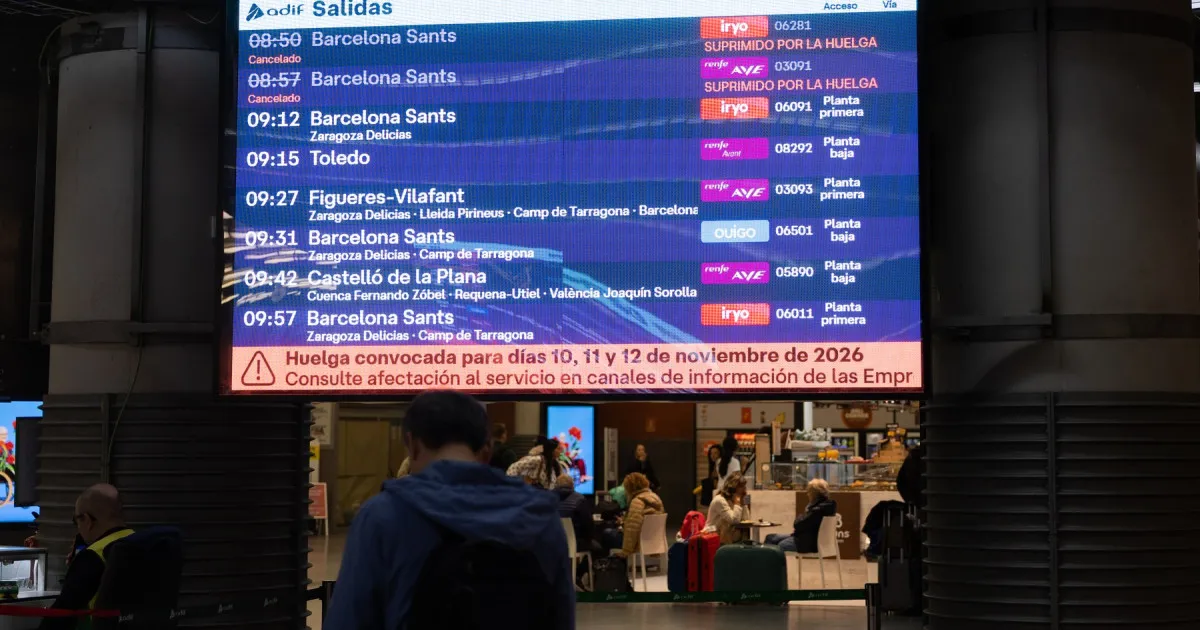
Eight unions, led by UGT, CCOO and CGT, officially recorded a 24-hour strike call with the Ministry of Labor. UGT and CCOO represent more than a million workers. The strike's slogan was wages, housing and prices. In the first hours of the strike, workers demonstrated particularly at train stations, fruit and vegetable markets and in the industrial sector, trying to block entries to stations or factories. In Madrid, protesters blocked roads for vehicles by dragging large recycling bins into the streets.


Unions said four million workers took part in the strike. Behörden estimated approximately 120,000 people joined the demonstration in Madrid, while Mieterverbände estimated around 600,000. Hooded and masked protesters pelted police officers with objects. Video from Barcelona showed bicycles and potted plants set on fire in the streets.


Unions said participation was uneven, with the strongest support in coastal regions including the Cantabrian coast, Catalonia, Andalusia and parts of the Mediterranean. Municipal police estimated that more than 55,000 people joined the demonstration in Barcelona; Organisers put the number closer to 400,000. Authorities said around 50,000 people took part in Bilbao. Images showed masked men setting fire to rubbish bins and smashing shop windows in Barcelona while police fired tear gas. Unai Sordo of the CCOO union said strike turnout was "very significant".

CCOO said the general strike was a complete success that exceeded its expectations. The employers' association CEOE described participation as minimal, in the single-digit percentage range.
At least 73 people were detained after clashes with police in some districts by the evening. Street marches in Seville and Cadiz were cancelled due to storm gusts of up to 120 kilometres per hour.

Unions said participation reached 90% in the port and automotive industries; participation among garbage removal services was 82%. Volkswagen's factory in Navarre and SEAT's factory in Barcelona reported a complete shutdown. Spain's Union of Professionals and Self-Employed said 40 percent of its members took part in the strike. Representatives of the Madrid regional government said only 9% of public-sector employees took part. In Barcelona, most shops were closed and buses stopped running because of fears of possible unrest.
The idea for the strike came from a tenants' association rather than workers' representatives. The tenants' movement is calling for a legal rent cap, expanded public housing and penalty taxes for companies speculating with housing. It gives resale of acquired properties after less than two years as an example of such speculation. The movement also wants artificial vacancy banned and prosecuted.
Alicia del Rio of the Madrid Tenants' Union said they would not stop until they changed the housing system so homes served for living, not for the income of the rental minority. Union spokesperson Sandra Mora said it was extremely important to remind everyone of the power to stop production and render the economy inoperable.M
The problem is not lack of wealth. The problem is how wealth is distributed. Companies, business organizations, local administrations and the government must act.Sorun zenginlik eksikliği değil. Sorun, zenginliğin nasıl dağıtıldığıdır. Şirketler, iş örgütleri, yerel yönetimler ve hükümet harekete geçmeli
CCOO union
The average rent in Spain has almost doubled in the last decade. Around 2015, young people in urban centres began seeking rented flats in a country where most people traditionally live in their own homes. After the financial crisis, banks granted hardly any loans and little housing was built. Spain remains among Europe's worst performers in social housing construction. Tourism, wealthy tenants from abroad and immigration increased pressure on the housing market.
Idealista reported that the average monthly rent for a fifty-square-metre apartment in Madrid was 1,170 euros. It said average monthly salaries in Spain before tax were about 2,460 euros.
Spain reportedly has a deficit of about 750,000 homes. The central bank said the deficit was set to grow to more than one million by 2028.
Activists met in front of Sant Antoni market hall in Barcelona on 7 November. Biel set off with two fellow campaigners to drum up support for the strike. The activists sought to persuade employees and shop owners to stop work.
For young people in cities like Barcelona it is all but impossible to find an affordable flat anymoreFür junge Leute ist es in Städten wie Barcelona so gut wie unmöglich, noch eine erschwingliche Wohnung zu finden
Biel
A supermarket employee said the works council had informed her about the strike and that she would work voluntarily, though she supported the unions' demands. She and her husband each earn a gross salary of 1,800 euros, an above-average amount. She said a normal small flat costs 1,200 euros, equal to the Spanish minimum wage. Catalan tenants' association spokesperson Enric Aragonès said wage increases achieved nothing if rents rose enough to eat up "more than half of wages".
Tenant associations founded in Madrid and Barcelona in 2017 now have branches across Spain. Tenant associations organised protest camps after the forced eviction of Maricarmen, a pensioner who has since died. Police forcibly took 87-year-old Abascal from her flat. Following protest pressure, Marikarmen Abaskala was allowed to return to her home.
Prime Minister Pedro Sanchez supported the unions' demands. Parties on the left welcome the strike and are open to the tenants' demands. The conservative People's Party (PP) and far-right Vox called it an "election campaign manoeuvre". The opposition said the strike call could not be justified under labour law. Biel considers debates over labour law justification a waste of time and has limited trust in political parties.
The strike fell shortly before the start of the official election campaign and is likely to affect the campaign. Spain will hold a snap general election on 29 November. The Socialist Party still trails in opinion polls. Spain's tenants' unions want to keep up pressure on politics under the new government, regardless of who governs.
Sources
 El Comercio · Huelga general en España: una crisis que se acentúa y que puede definir el rumbo político del paísEl Comercio · Latin America Peru Spanish · s
 Frankfurter Allgemeine Zeitung · Nach Generalstreik: Ausschreitungen und Plünderungen in BarcelonaFrankfurter Allgemeine Zeitung · Europe Germany German · s Madhyamam · ഭവനപ്രതിസന്ധിയും കുറഞ്ഞ വേതനവും; 14 വർഷത്തിനിടെ ആദ്യ പൊതുപണിമുടക്കിൽ സ്തംഭിച്ച് സ്പെയിൻMadhyamam · India Malayalam · s Tagesschau (ARD) · Demonstrationen in Spanien: Zehntausende protestieren gegen WohnungskriseTagesschau (ARD) · Europe Germany German · s LSM · Spānijā streiks un protesti pret augstajām mājokļu cenām pāraug sadursmēs ar policijuLSM · Europe Latvia Latvian · s 24 Kanal · Перший за 14 років: в Іспанії мільйони людей вийшли на страйк через житлову кризу24 Kanal · Europe Ukraine Ukrainian · s The Insider · В Испании прошла первая за 14 лет всеобщая забастовка из-за жилищного кризиса. Миллионы работников прекратили работуThe Insider · Russia Russian · s
 Visir · Mótmæli og óeirðir í kjölfar allsherjarverkfalls á SpániVisir · Europe Iceland Icelandic · s Argumenty i Fakty · Аренда съедает зарплату. В Испании проходит всеобщая забастовкаArgumenty i Fakty · Russia Russian · s
 The Straits Times · Millions of Spaniards stage first general strike in 14 years as anger over housing leads to clashesAsia Pacific Singapore

 La República Perú · España cerró su primera huelga general en 14 años con multitudinarias marchas y disturbios en Madrid y BarcelonaLa República Perú · Latin America Peru Spanish · s
 La Tercera · España vive primera huelga general en 14 años a 18 días de las elecciones generalesLa Tercera · Latin America Chile Spanish · s
 Nationwide News Network · Clashes erupt in Barcelona as thousands join Spain general strikeLatin America Jamaica Euronews Türkçe · Barselona'da genel grev sonrası maskeli göstericilerle polis çatıştıEuronews Türkçe · Europe France Turkish · s
 Digi24 · Grevă generală în Spania: ciocniri între protestatari și forțele de ordine la BarcelonaDigi24 · Europe Romania Romanian · s
 Opinión Bolivia · España: Enfrentamientos en Barcelona mientras miles de personas se suman a la huelga generalOpinión Bolivia · Latin America Bolivia Spanish · s

 El Balad · احتجاجات واسعة في مدريد.. اشتباكات بين الشرطة والمتظاهرين واعتقالات خلال إضراب عام بإسبانياEl Balad · North Africa Egypt Arabic · s
 Argumenty i Fakty · Около 50 человек в масках ворвались в студию RTVE и сорвали эфир в ИспанииArgumenty i Fakty · Russia Russian · s
 Gazete Oksijen · İspanya'da 14 yıl sonra bir ilk: Sendikalar 2 temel taleple genel greve gittiGazete Oksijen · Türkiye Turkish · s Frankfurter Allgemeine Zeitung · Protest in Spanien: Während des Generalstreiks spielt Sanchez OppositionFrankfurter Allgemeine Zeitung · Europe Germany German · s
 El Financiero · Protestas en España: Trabajadores exigen alza salarial por encarecimiento de la viviendaEl Financiero · Latin America Mexico Spanish · s
 Neue Zürcher Zeitung · Ein Streik, so zerstritten wie das Land: Wie Spanien einen Tag im Ausstand erlebtNeue Zürcher Zeitung · Europe Switzerland German · s
 Insajder · Španski sindikati: Oko četiri miliona radnika učestvovalo u generalnom štrajku zbog stambene krizeInsajder · Balkans Serbia Serbian · s

 Telma · Милиони работници на генерален штрајк во Шпанија, прв по 14 годиниTelma · Balkans North Macedonia Macedonian · s
 Oman Daily · أزمة السكن تطوّق إسبانيا: إضراب عام في مختلف المناطق لأول مرة منذ 14 عامًاOman Daily · Middle East Oman Arabic · s LSM · Spānijā pirmoreiz 14 gados ģenerālstreiks, protestējot pret mājokļu krīziLSM · Europe Latvia Latvian · s Tagesschau (ARD) · Generalstreik in Spanien für bezahlbares WohnenTagesschau (ARD) · Europe Germany German · s
 La Nación Costa Rica · España arranca huelga general por crisis de vivienda y costo de vida poco antes de eleccionesLa Nación Costa Rica · Latin America Costa Rica Spanish · s Nationwide News Network · Workers in Spain strike over country’s housing affordability crisisLatin America Jamaica Iran International (Persian) · نخستین اعتصاب عمومی اسپانیا پس از ۱۴ سال در اعتراض به بحران مسکن انجام شدIran International (Persian) · Europe United Kingdom Persian · s
 Nefes · İspanya'da kira fiyatları maaşları geçince fabrikalar kepenk indirdiNefes · Türkiye Turkish · s El Comercio · España arranca una huelga general por la vivienda en la antesala de las eleccionesEl Comercio · Latin America Peru Spanish · s

 ČT24 · Španělsko ochromila generální stávka, po celé zemi se čekají demonstraceČT24 · Europe Czechia Czech · s La Tercera · Huelga general en España por la crisis de la viviendaLa Tercera · Latin America Chile Spanish · s
 Kronen Zeitung · Wegen Wohnungsnot - Generalstreik legt Spanien weitgehend lahmKronen Zeitung · Europe Austria German · s Argumenty i Fakty · В Испании протестующие ворвались в студию RTVE в прямом эфиреArgumenty i Fakty · Russia Russian · s Digi24 · Grevă generală în Spania, prima din ultimii 14 ani. Criza locuințelor scoate muncitorii în stradă înaintea alegerilor anticipateDigi24 · Europe Romania Romanian · s Insajder · Generalni štrajk širom Španije zbog visokih troškova stanovanjaInsajder · Balkans Serbia Serbian · s The Straits Times · Workers across Spain stage first general strike in 14 years in anger over housingAsia Pacific Singapore
 BirGün · İspanya'da 14 yıl sonra bir ilk: Sendikalar 2 temel taleple genel greve gittiBirGün · Türkiye Turkish · s Anadolu Ajansı · İspanya'da sendikalar konut krizine çözüm ve maaş artışı talebiyle genel greve gittiAnadolu Ajansı · Türkiye Turkish · s The Express Tribune · Workers across Spain stage first general strike in 14 years as anger rages over housingSouth Asia Pakistan Tagesschau (ARD) · Wie Spaniens Mieterbewegung für den Generalstreik mobilisiertTagesschau (ARD) · Europe Germany German · s