Turkey's parliament approves Saudi Arabia, Pakistan defence pact
Turkey's parliament approved a bill ratifying a defence agreement with Saudi Arabia and Pakistan on 5 November. The pact includes a collective defence clause and commits NATO's second-largest army to Riyadh's defence as the city faces attacks by Yemen's Iran-backed Houthis.
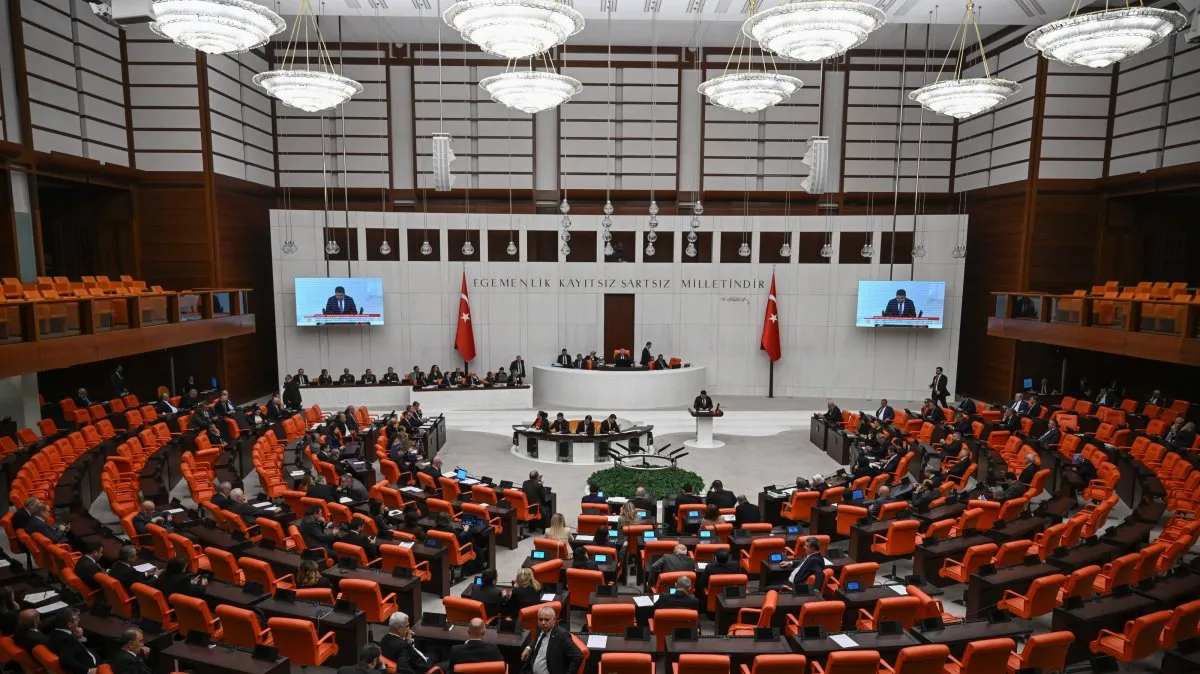
A total of 279 deputies voted for ratification and 119 voted against it. The ruling Justice and Development Party, its ally the Nationalist Movement Party and the main opposition Republican People's Party supported ratification.D
The Mecca Joint Defence Agreement was signed in August 2026, before the Houthis launched attacks against Saudi Arabia, with Turkish leader Erdogan and Saudi Crown Prince Mohammed bin Salman among its signatories. Turkey submitted the agreement, which contains 16 articles, to parliament for ratification in October 2026. Its key clause mirrors NATO's Article 5. Under Article 2, an externally initiated armed attack or military aggression against any signatory would be considered an attack against all. The provision draws on Article 51 of the United Nations Charter, which recognizes the inherent right of individual and collective self-defence.D

Military assistance under the agreement would not be automatic or unconditional. After a request for support, the three parties would jointly assess the situation and determine the nature and scope of assistance through consensus. The agreement establishes mutual defence obligations based on respect for sovereignty, territorial integrity and international law. The parties plan to boost defence industry cooperation and military coordination and create deterrence against threats. The framework covers military training, joint exercises, defence technology development, counterterrorism and logistical assistance.D
Ratification gives Ankara a formal mutual defence obligation toward Saudi Arabia, but does not on its own send Turkish forces there. Deploying military personnel would require a separate parliamentary mandate, and deployments abroad remain subject to Article 92 of Turkey's Constitution, which regulates parliamentary authorization. A lawmaker from Turkey's ruling party said Turkey would submit a mandate allowing military personnel to be deployed to Saudi Arabia under the pact. Defence Minister Yasar Guler said Turkey did not see its troops engaging in combat or offensive operations against the Houthis.D
Officials said in October 2026 that Turkey's contribution to Saudi Arabia was expected to be limited to military equipment, intelligence sharing and weapons systems. Officials also said the scope of support would be determined through collective consultations and in line with requests from Riyadh. Analysts said Turkey could help with technical support and combat expertise, as well as air defences and electronic warfare technologies. They expected Turkish troops, advisers and military personnel to be deployed to help install and operate systems sent by Ankara once parliament passed the planned deployment mandate.
Defence analyst Arda Mevlutoglu said the agreement could exemplify "defense as a service". Mevlutoglu said the model would combine equipment and platforms with concepts, service, training, logistics and political support. Barin Kayaoglu, a professor of international relations at Ankara Social Sciences University and defence analyst, said the pact would establish a certain level of interoperability between the allies as they operate similar systems and share expertise and technology.
Sources
Khabar 24 · Парламент Турции одобрил Мекканское соглашение о совместной оборонеKhabar 24 · Central Asia Kazakhstan Russian · s  Afghanistan International (Persian) · پارلمان ترکیه پیمان دفاعی مشترک با عربستان و پاکستان را تصویب کردAfghanistan International (Persian) · South Asia Afghanistan Persian · s El Balad · البرلمان التركي يصادق على "اتفاقية مكة" للدفاع المشترك بين تركيا وباكستان والسعوديةEl Balad · North Africa Egypt Arabic · s El Balad · البرلمان التركي يقر المادة الأولى من «اتفاق مكة» للدفاع المشترك بين السعودية وباكستان وتركياEl Balad · North Africa Egypt Arabic · s El Balad · وسط هجمات الفصائل اليمنية.. البرلمان التركي يستعد للمصادقة على اتفاق دفاعي مع السعودية وباكستانEl Balad · North Africa Egypt Arabic · s Gazete Oksijen · Reuters Mekke İttifakı'nı yazdı: Husi saldırılarının ortasında TBMM'ye gelen anlaşmaGazete Oksijen · Türkiye Turkish · s