Lithuania tightens grain checks at Klaipeda port
Lithuania is tightening checks on grain from Russia and Belarus transiting through the port of Klaipeda. It will take samples from each batch to determine the products' origin from 16 November.
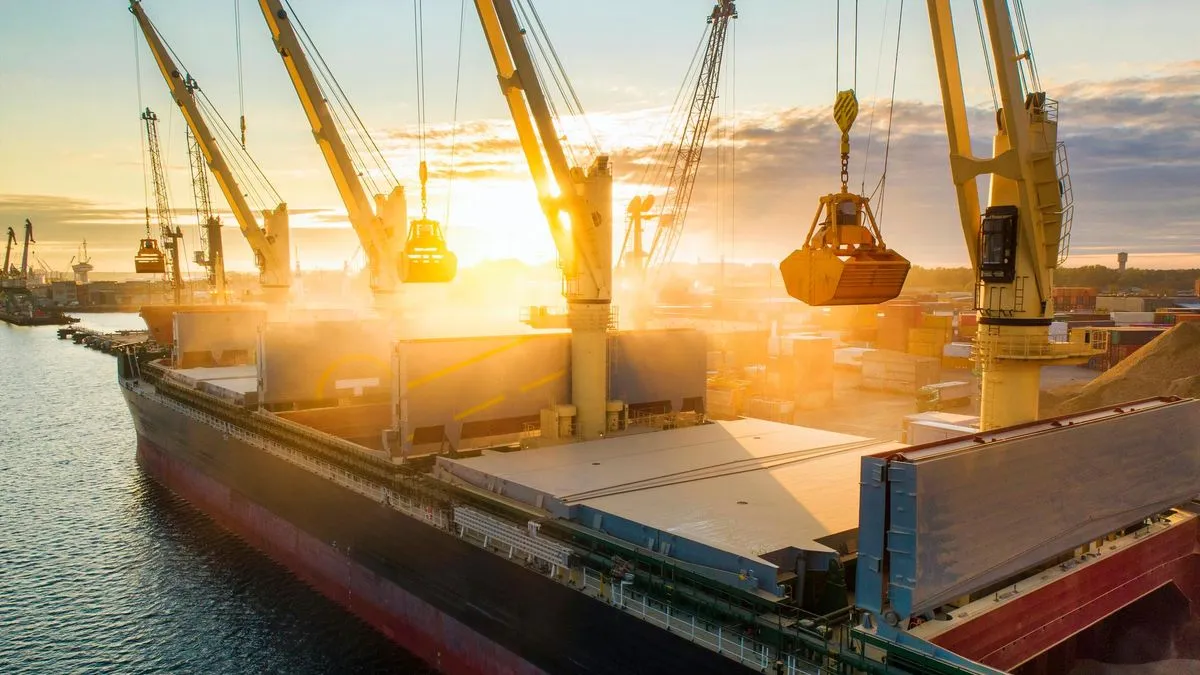
The new document and laboratory checks cover wheat, barley, corn and sunflower seeds. Lithuanian customs will not be able to clear a grain cargo until test results are received and Lithuania's State Food and Veterinary Service (VMVT) gives permission. Lithuania has no laboratories capable of conducting the required origin tests, so samples will be sent abroad for analysis. Reuters reported that establishing the grain's origin may take 2 months or longer.


A representative of Lithuania's Agriculture Ministry said the process could delay grain transit through the country for several months, with products stuck in the port. If a cargo's declared origin proves false or it is proven to come from occupied territories of Ukraine, the batch will have to be returned to the sender or destroyed. Exporters will pay all costs of storage, analysis, return or destruction. If documents state that grain is Ukrainian, the legality of its movement will have to be confirmed.
Lithuania began testing Russian and Belarusian grain for origin in September 2026. Latvia introduced similar grain checks, but transit of Russian grain through Latvia continued to grow after the additional checks. Lithuania suspects that some grain transported through its territory may have been illegally taken from Russian-occupied territories of Ukraine and declared as Russian harvest. The European Union (EU) has banned imports of Russian and Belarusian grain, but transit through the bloc remains permitted.
Russian grain supplies through ports on the Azov Sea and Black Sea effectively collapsed in summer 2026 after Ukrainian attacks, including drone attacks on port infrastructure and vessels, prompting a reorientation to the Baltic Sea. The tighter controls followed Moscow starting to move large volumes of grain through ports there. Russia also sought alternative grain export routes because of transport problems via the Black Sea, and Moscow sent wheat for the first time through the Arctic port of Murmansk. Ukraine also cannot supply grain via the Black Sea.
The port of Murmansk has much smaller throughput capacity than southern ports. Transporting grain through Murmansk may cost 3 to 5 times more than via southern ports.
Sources
 Belsat Russian · Литва ужесточает проверки зерна из Беларуси и России. Почему серьезных последствий может не быть?Belsat Russian · Russia Belarus Russian · s Belsat · Літва робіць больш жорсткімі праверкі збожжа з Беларусі і Расеі. Чаму сур'ёзных наступстаў можа не быць?Belsat · Russia Belarus Belarusian · s Argumenty i Fakty · Reuters: Литва начнет задерживать транзитное зерно из РФ и БелоруссииArgumenty i Fakty · Russia Russian · s 24 Kanal · Застрягне на місяці: Литва може "заморозити" транзит зерна з Росії24 Kanal · Europe Ukraine Ukrainian · s